For the record

Given the frenetic pace of our society, we struggle to embrace the concept of slowing down. We want everything now, and for the most part, we can often get it that quickly too.We get frustrated beyond belief by so many things:

  • if a website doesn’t load instantly

  • if our coffee isn’t in our hands within 5 minutes of just stepping foot in a cafe

  • if our electricity cuts out during a storm

  • if our mail arrives a couple of hours later than anticipated

  • if we don’t tick off all of our to do list in a day

  • if a flight is delayed, etc

Aghhh the list could go on, and we continue to go on living like this, as if, it’s our life purpose to become the most efficient life form on earth. This progression of humankind is making people more unhappy, discontented and restless, slowly eating away at us from the inside, and robbing us of joy, our ability to smile and to just be.

Over the last few years we’ve been making small consistent changes to the way we choose to live our life. These changes haven’t been too radical, and they certainly haven’t happened over night, but the impact has been dramatic.

From changing the way we purchase, eat and share our food to our dietary preferences, to being more conscious of where we spend our dollars and being responsible for our individual impact on the environment. We’ve made a commitment to being more aware, kind, and respectful to all those who serve us, and we gain joy from experience, rather than searching for it through “stuff”.

As the year neared its end, and the silly season drew us back into it’s fast pace, we found ourselves back in front of a tv of an evening, music was played less, and all stillness filled with a social media scroll. Lucky for us it was only about 3 weeks until this became apparent, and so we thought of a new way to jump back into the slow lane. Enter: The Record Player – Probably one of our favourite christmas presents to boot!

Now we love music, in fact in the first 6 months of our relationship we didn’t even watch tv, but with a cheap spotify subscription and/or anything you want accessible via youtube this doesn’t really help us to minimise our screen time, and if I’m totally honest is nowhere near as enjoyable as delving through a record store, finding a pearler for $15 and getting it home and playing it on repeat for the evening.

One thing we also never knew, was how many recent artists have released their albums on record, so if you’re reading this and thinking you would struggle listening to classics like Floyd, Hendrix and the Beatles all the time, then fear not- we also just got our hands on some Incubus, The xx and Mura Masa.

The result? Our tv has been on twice all week 1) only for the latest vikings ep and 2) for UFC, baby seems to go wild every time music is played ( i think we have a musical maverick on our hands), we’ve been falling back in love with artists and songs we haven’t listened too for ages, and…….. when telstra has an outage for days during this stormy season (which it will), we’ll  still have our music!

They say music is thriving, but the business is dying thanks to piracy and the arrival of iTunes, which destroyed the notion of an album in favour for a single downloadable track. I’ll be the first to admit i’m guilty of using these mediums in the past, but feel much better now knowing that I’m paying for/and respecting the music that’s been created; it’s a fair exchange really when you consider all the feels we get from music.

So for the record (insert smug laugh), we are really embracing this forgotten concept of “waiting”. Waiting for a new record to be released, waiting to get home to listen to our favourite tunes, and waiting for an ordered record to arrive, you’d be surprised how refreshing it is to not have everything so accessible.
Rhian Hunter
When being a conscious consumer pays off

For those who know me, know all too well how much I hate “STUFF”. I’m minimalistic to the point that the concept of owning more than what we need: two of everything, ex; cups, mugs, plates etc didn’t cross my mind until recently entertaining for guests  I also still use a hammy down iPhone 5, and enjoy the different textures of it’s lovely cracked screen – it functions, that’s all that matters right?

The truth is, I crave a slow and simple life. When, and if I do have to purchase “things”, I enjoy waiting to be able to purchase them (credit cards aint my thing). I love when they are made with someones own two hands, where the product I’m receiving has been crafted from passion rather than profit, and the exchange of product for it’s price is equally beneficial to both parties. Mass production might be cost-effective to the consumer, but it’s generally the workers and the environment that suffers as a result. The quality is generally not great, and thus the need to replace said “thing” down the track leads to more wastage and more buying, and so the dispensable cycle continues.

With our first baby on the way, I’m naturally freaking out about all the “stuff” we are told to acquire. We’re so grateful for all the clothes, furniture etc that has already been recycled our way, I know some people find it hard to say No, but we are loving it!

With that said, there has only been 1 thing I’ve really wanted to get my hands on – something that won’t just be tossed aside in a year to come, or replaced by an upgraded model. This product is also sustainable, environmentally friendly and ethically made, having an impact on both people and the planet.

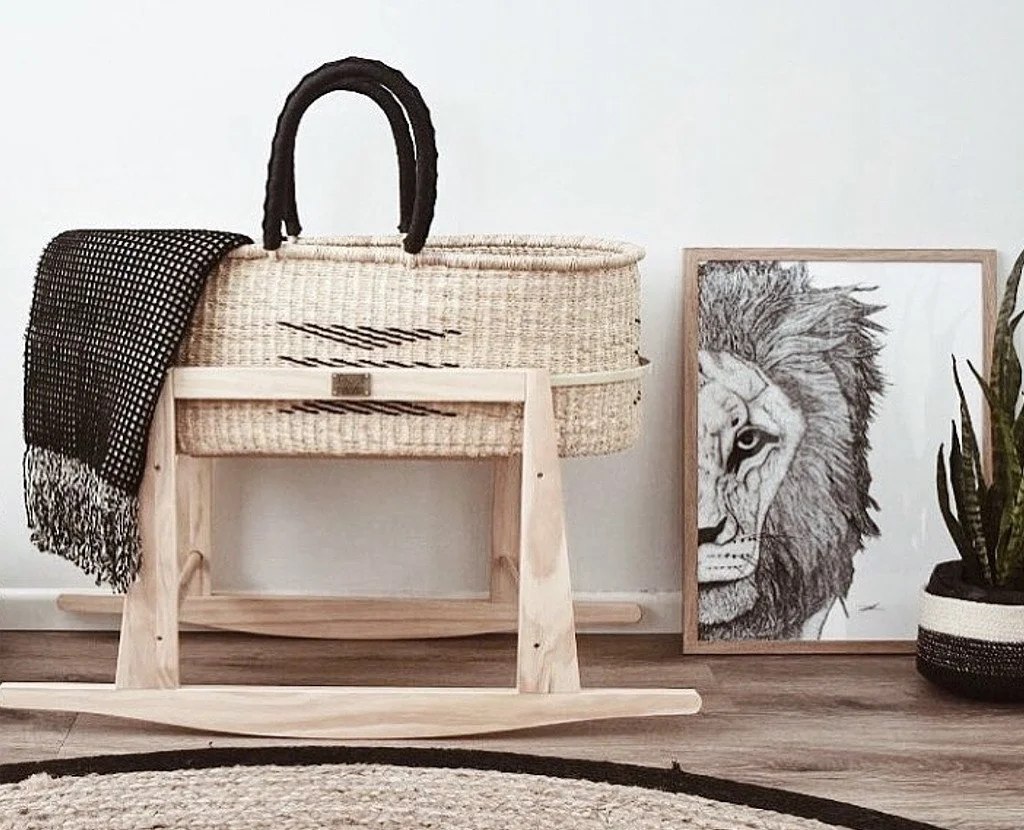
Let me introduce you to The Young Folk Collectives – Moses Basket: The perfect cosy sanctuary/bassinet alternative for bub, that can be utilised in many ways, even after bub grows out of it.

The Young Folk Collective are a Brisbane born company (Yay to supporting locals) who have actively sought beautiful hand woven products from Ghana, helping to support the Ghanian weavers, their families and communities, by creating a constant income and preserving their fine art of basket weaving.

They allow their weavers to have full creative control over the designs, so each design of basket has their own inspiration and story. This way, each one is authentic and completely unique.”

Each basket is truly one of a kind, this became more apparent on Sunday evening when The Young Folk Collective released 40+ individually designed baskets, all of which sold out in a matter of minutes. Now I’m not exaggerating here, I had 5 + tabs open on my laptop at 6:58pm eagerly awaiting the clock to strike 7pm (when the baskets were available for purchase). At 7:08pm not only had I not been able to snag 1 of the 5 designs I had been lusting over for several months, I wasn’t hadn’t even managed to get one past the shopping cart – ALL SOLD OUT. Whilst disappointing for us, it’s also pretty cool that their are a tonne of other conscious consumers out there!

I can’t tell you how devastated I was, I don’t get attached to things very often, but here I was, truly gutted about missing out on another restock. My partner and I scoured the internet in search for one, looking internationally for similar designs ( most companies who sold these, didn’t posses the same ethos as these guys, and so I didn’t feel willing to hand over the mons). By about 9pm we found a company in America, who had a very similar approach, they even displayed pics of the creators holding their handmade goods, and I felt this to be a good alternative – The only catch, they didn’t include or sell the mattress’s.

They aren’t the cheapest products to buy, and before doing so I wanted to ensure I could find a mattress that would safely fit, so I contacted TYFC thinking that they sold custom sized mattresses. The next morning, I received an email letting me know that the custom sized mattresses were for their baskets, and what designs I had liked previously, they said they may have 1 in their warehouse, but if it wasn’t one i liked they would still help me out with a custom mattress. I emailed through the list of all the ones I liked, and they sent back an image of one (that whilst wasn’t on my list) was absolutely bloody perfect! I arranged payment, and they had the basket, mattress and stand ready for dispatch that afternoon.

I’m absolutely blown away with this level of customer service, going that above and beyond just for 1 customer really shows this is a company that cares. They care about the quality of the products they sell, the impact their products have on the environment, on their workers and also the consumer. Whilst I still don’t like buying “things”, anything else I do require for bub – baby carriers, linen, etc I’ll definitely be making a conscious decision to source them from these guys before I even look anywhere else.

It really goes to show the difference between supporting small companies vs large ones. I encourage you to look for and support local business. We all have the choice of how and where we spend our money, and by becoming a conscious consumer, you’re already taking a positive step toward making a difference.

Rhian Hunter
A-leafy-ate your digestive complaints…

In Ayurvedic tradition it is recommended that we consume all tastes in order to achieve and maintain optimum health; sweet, salty, sour, bitter, pungent and astringent. Sadly, our western diet primarily consists of salty and sweet tastes, lacking in the others: especially bitters. For this reason it comes as no surprise that many people now suffer from some kind of digestive complaint, and whilst eliminating certain foods that trigger or exacerbate these conditions is an important step to take, so is incorporating foods that will support and improve our cause.

Bitter foods activate taste buds that simultaneously stimulate enzyme production and bile flow, promoting digestion. The better your foods are digested, the more nutrients you will absorb from food. Bitter greens also have a high fibre content, which assists in eliminating waste through the digestive tract. Furthermore these guys are nutritional powerhouses packed with Vitamins A. C and K folate, and minerals such as calcium, potassium and magnesium.

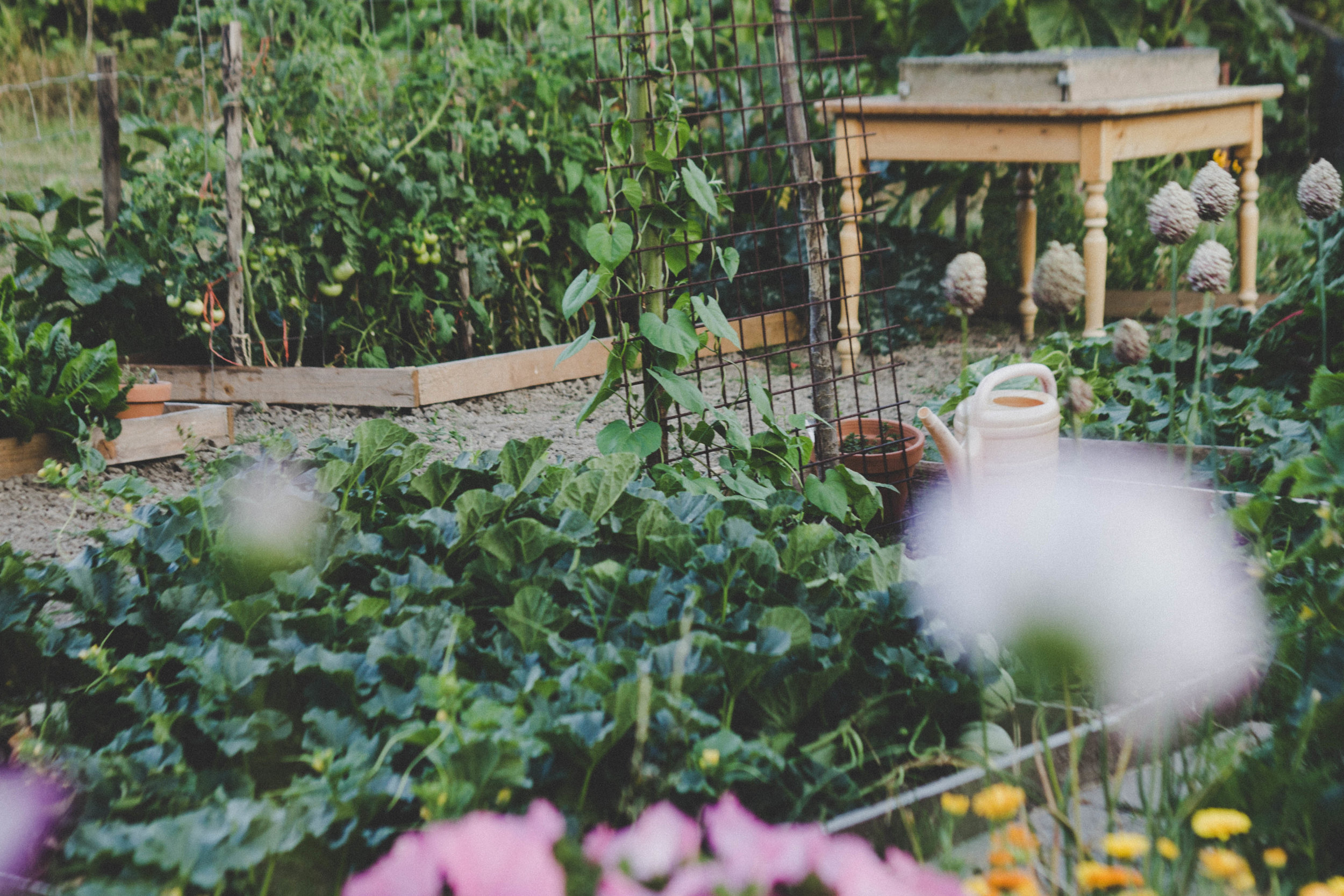
So how can you start consuming these green morsels of goodness? Aside from visiting your local market, Spring time is the perfect time to head to bunnings, stock up on some quality organic soil and potting mix, seeds or seedlings and get in your garden and grown your own. I’m pretty excited to see my “digestive garden patch” grow and flourish in the coming weeks/months and I’ve also added a few extra plants to my mix, and there are a number of other bitter greens you can plant, however this is what i’ve got going on at the moment:

  • Amaranth greens

  • Chia

  • Chicory 

  • Chilli

  • Endive

  • Misome

  • Mizuna

  • Mesclun

  • Mustard Greens

  • Red Papaya

  • Radicchio 

  • Rosella Hibiscus

  • Rocket

  • Spinach

  • Sorrel

  • Tatsoi

  • Wasabi

I’ve planted a few marigold into the mix as natural pest deterrent and we scatter thin bamboo sticks across the top of an evening to keep the scrub turkeys out. So far these guys have been easy to get our hands on, require the same kind of TLC as each other and have been lapping this spring sunshine & rain. Furthermore it gets us outside, connected to mother nature and reestablished with our roots. We found it so satisfying stepping outside to pick our own herbs and throw them into meals, so can hardly wait to create a whole meal from patch to plate! Stay posted for progress pics/harvest , and if you are a natural green thumb and have some tips you’d like to share, please feel free to comment below!

Rhian Hunter
Having a baby and the anticipation of the unknown can be both an exhilarating and rocky road.

Having a baby and the anticipation of the unknown can be both an exhilarating and rocky road.

Unfortunately there is nothing about pregnancy that’s particularly uniform, and for some conception comes easier to others. Infertility is a painful subject for many couples, especially when the reasons behind it have not been fully explored nor understood.

Conception and a healthy pregnancy relies heavily on both parents having a balanced body, as well as a healthy mindset. It’s important we get to know and really understand our bodies, and our fertile time, but not so much that it becomes an obsession, which may knock our bodies out of kilter and affect our fertility. Infertility is defined by the failure to achieve a clinical pregnancy after 12 months or more of unprotected regular intercourse. our concern for growing a baby often starts either as soon as we start trying for a baby or once we fall pregnant, but given the toxic load most of us carry around (mentally and physically), both parents should be thinking about a complete detox pre-conception.

For some, allowing 6-12 months for conception seems all to far away, but when we start to consider an intentional detox to prepare the body, this ideally shouldn’t be done within 2-3 months of getting pregnant. The reason being, is if you do release toxins whilst you fall pregnant, the baby may potentially be absorbing those into his or her developing body. Preparing yourselves mentally is equally as important preconception, as stress, past anxieties, or current worries could impact on your ability to conceive if not dealt with. Just as detoxing the body takes time, so too, does the mind.

My preconception treatment plans are designed to lessen the toxic load (mentally & physically), whilst optimising health and nutrition in both mum and dad to improve fertility parameters.

My continuation of care can include: support for a healthy pregnancy, support for pregnancy loss, safe exercise through pregnancy, meditative/ relaxation exercises to help prepare for labour, breastfeeding, post-birth hormone recovery and getting your body back after.

So whether you are thinking about having a baby, trying to conceive, or would just like some additional support – check out my online store, send me a message, or book an appointment with me today!

Rhian Hunter
If we are going to swear off a food completely, at the very least, let’s know a little something about it.

This morning I shared an amusing video, that sadly depicts an ever growing population of people swearing off certain foods; in particular gluten, without having any knowledge on what gluten actually is. So what is Gluten? Gluten is a composite of storage proteins termed prolamins and glutelins and stored together with starch in the endosperm of various grass-related grains. It is found in grains such as wheat, barley, rye, spelt, and other related species and hybrids and products of these. The two main proteins in gluten are glutenin and gliadin. Gliadin is responsible for most of the negative health effects experienced from consumption.

I discussed the reasons behind why this is of concern; Firstly without knowing what gluten is, let alone the foods contain this protein we may be

a) Avoiding foods that are are otherwise fit for consumption and healthful, be missing out on vital nutrients that we would usually consume regularly.

b) Consuming foods that are labelled “Gluten Free”, yet are highly processed, high in refined carbohydrates, devoid of any nutrients and lacking in fibre.

and most importantly

c) Missing out on vital nutrients that we would usually consume from these foods regularly.

It’s so important, when removing foods from the diet that it’s done so in a way way that optimises your health, rather than compromising it later down the track, and so as promised I’ve created a FREE 13 Page Guide for you to Download, Print, Study and or Share with others.

You can download the HHNT Foods Naturally Free From Gluten Guide here—> HHNT Gluten Free Food Guide

Rhian Hunter
Salam Pembuka! Greetings from Bali

Salam Pembuka from Nusa Lembongan!

I hope you have all been able to maintain a small home practice in my absence, and as promised I will be uploading a couple of online classes for you to enjoy at home in the next few weeks.

Now the reason I haven’t had much of an online presence for the last 10 days is due to the fact that I really needed some time to retreat in my own personal practice, and allow myself to return back to being a student. When we dedicate most of our time to facilitating the practice of yoga, it becomes easy to forget how it feels to be entering a class for the first time.

As you read this, you may find comfort in knowing that even as teacher I experience negative feelings or even, dare I say it- hate certain asana. However, the poses we have aversions to are also often the most valuable ones for us to practice. I don’t get amongst inversions or arm balances all that often, and so, practicing these has felt somewhat relatively foreign to me. Bringing up all the feels; challenging, uncomfortable, a few tears here, and a few doubts there, and yet so incredibly satisfying once I’d pushed through all the icky stuff.  If you’ve continued to read up until this point, relax, I’m not going to be basing classes around this anytime soon, but what I will be touching on is a very important tool that can make any bothersome poses easier to practice, creating a less daunting experience for you when you approach your mat and enhancing your practice for many years to come.

Pranayama is the formal practice of controlling the breath. It is one of the most important aspects of yoga, which can often be overlooked, especially as a beginner. You’ve no doubt seen many a yoga meme “just breathe”, or  at least been guided to inhale and exhale during a class, but how much attention are you paying to these important queues? There are many different types of pranayam, just as there are asana, however I believe that Ujjayi pranayama (u-jjA-yi) or whispering breath should be the first breath to begin your practice. You can use this technique to focus your mind, regulate the flow of prana, in and out of the body, invigorate or calm you during practice, and most importantly it will assist you in extending, lengthening and deepening your breathing during the practice of asana. A little tip: The slower and softer you do it, the more cooling effect it will have on your body, and the more strong and louder you do it, the more heating effect it has.

In english this technique is often translated as whispering or oceanic breath, and this is due to the sound you produce when practicing it. I have attached an audio at the end of this post for all you auditory learners, but for those who do fine by reading the instructions follow below. A little side note: Some of you who are new to the practice of yoga may feel embarrassed or silly to begin with as you are making subtle noise, but I ask you to approach this with an open mind, and at least practice 1 entire class using this technique throughout, I assure you, your practice will be better for it.

  1. Before you start applying ujjayi to your active practice, come into a comfortable seated posture, with your chin parallel to the floor. Begin breathing with a soft airy sound.

  2. With each inhalation focus on lifting the upper body through expansion of the lungs, and as you exhale, try not to collapse in the spine, just simply release the exhalation slowly, smoothly, and effortlessly, along with any tension in the body

  3. Now as you exhale, whisper and lengthen the sound ha (haaaaaaaaaaaaa) and bring awareness into the area in your throat that this sound/breath originates. You want to create or mimic this same sound however with the mouth closed but without vocalising. It should sound smooth and soft, like the sound of the ocean or perhaps a sigh.

  4. Continue to play with this breath, seeing if you can make it louder and softer; remembering louder and stronger in increase heat in the body, softer  and slower to produce a cooling effect.

  5. Not sure when to inhale or exhale? As a general rule we want to inhale when we lengthen and extend, as the diaphragm contracts downward, allowing air to be drawn to the lungs, where as exhaling should be done as we round the lower back or contract the abdominal muscles to stabilise the connection between our pelvis and lower back, we would also  exhale when we want to soften or release in a posture.

Click here to listen to Ujjayi Audio

Rhian Hunter
A Guided Meditation to celebrate International Yoga Day

Wednesday the 21st June marks the day that adiyogi first set his eyes on his seventh sages; who were the first disciples to carry the science of yoga to the various parts of the world, spreading harmony and peace for humanity, which is the very essence of yoga.

I express gratitude for the practice of yoga, it’s ability to heal the heart, transform the body and mind, and for the people I’ve met with it along the way.

Without Dhyana (meditation) the 7th Limb of Yoga, I don’t think I would be where I am now, and so to celebrate International Yoga Day I offer you this small gift; A guided Meditation that may begin or continue your own personal yoga journey.

On Wednesday 21st June, find yourself a quiet space, place your phone on do not disturb (if not using a laptop), make yourself comfortable, click the link, choose direct download, hit play, close the eyes down & connect in with yourself. Namaste 

https://www.dropbox.com/s/6ewjo11ucb6cqdm/InternationalYogaDayGuidedMeditationRHunter.m4a?dl=0

Rhian Hunter
Vegan Waffles w/ Rose Soaked Blackberries, Pitaya Ice Cream & Pistachios

hese are possibly my newest favourite treat, and soon to be available from The Front Room!

A Side note: When purchasing oats, look for organic and steel cut oats Ingredients: 100% Oats In Australia under the Australian Food Standard Labelling laws they cannot be labelled as Gluten Free as they can often be exposed to wheat or other gluten containing grains; through shared crops planted in close proximity, which can introduce gluten into the crop making them unfit for consumption for sufferers of coeliac disease. Oats are inherently gluten-free,  and evidence shows that uncontaminated oats are well tolerated even by most people with coeliac disease (1).

Bottom Line: If you have coeliac disease and wish to consume oats as part of your gluten free diet, then do so under medical supervision to ensure appropriate review and safety.

Makes 4 Large Waffles or 8 Small Waffles (depending on the size of your waffle iron)

For the Pitaya Ice Cream:

2 Cups Frozen Pitaya (diced)

2 Frozen Bananas

1/2 Cup Almond Milk

1 tsp. Rosewater

For the Waffles:

Dry Mix

3 Cups Oat Flour ( throw your oats into a blender to create your oat flour)

2 tsp. Baking Powder

1/2 tsp. Salt

1 tsp. Cinnamon

1/2 tsp. Cardamom

Wet Mix

4 Cheggs (mix 4 TBLS of ground chia seed w/ 3/4 cup of water to form an egg like consistency, if too thick add a bit more water)

3/4 Cup Almond Milk (room temp)

1/4 Cup + 1 TBLS Coconut Oil (melted)

2 TBLS Rice Malt Syrup

1 tsp. Vanilla Extract

Toppings:

1 Cup Frozen/Fresh Blackberries

2 TBLS Rosewater

Crushed Pistachios

*Coconut Ice Cream

*Drizzle of Maple/Rice Malt Syrup or Melted Dark Chocolate

To Make the Pitaya Ice Cream:

  1. Blitz all the pity ice cream ingredients in a high speed blender or food processor, pour mixture into a container lined with baking paper, and set aside in freezer until ready to serve.

To Make the Waffles:

  1. Turn on waffle iron to allow to heat up.

  2. Mix together all dry ingredients

  3. In a separate bowl, beat together the wet ingredient

  4. Add wet and dry mix to a high speed blender or food processor until a well combined batter forms

  5. Cover the Blackberries with rosewater and place in the fridge until ready to serve.

  6. Pour the batter into the heated waffle iron; enough to cover the centre and most of the central surface area, close the lid. Once the waffle is deeply golden and crisp (about 7-10 minutes), transfer to a cooling rack.

  7. The waffle may still feel quite fluffy, but once removed and cooled down it will harden. You can also reheat/crisp the waffle in the oven for a couple of minutes just before you serve.

  8. Serve with pitaya ice cream, coconut ice cream, rose soaked blackberries, crushed pistachios and a drizzle of rice malt/maple or dark melted chocolate!

(1) 2017). Retrieved 18 June 2017, from http://www.coeliac.org.au/uploads/65701/ufiles/Position_Statements/CAPSOats.pdf

Rhian Hunter
My Tropical Love Affair

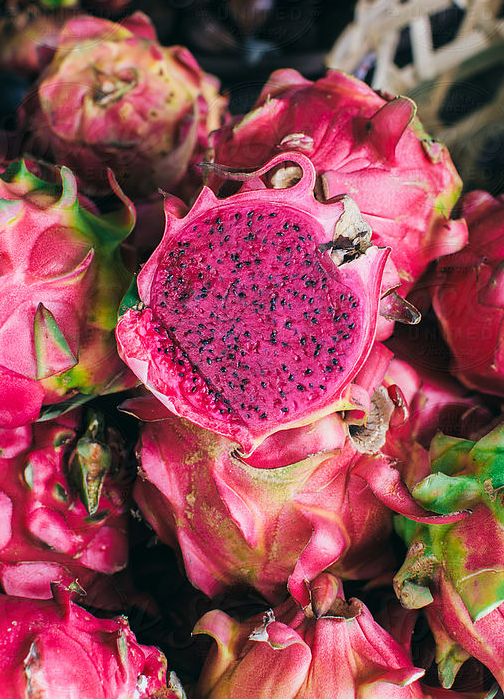
As a nutritionist I count nutrients, not calories and my constant quest to create the most nutrient dense meals is something I never grow pitay-red of. As acai takes the victory lap in my superfood war; a new contender is forging a path. If my pun didn’t give it away earlier, I’m introducing you to the latest health food craze. Enter pitaya, or dragonfruit as we commonly know it in Australia. This vibrant fuchsia coloured gem is more than just a pretty Instagram picture. This fruit originating from Central America, South America, and Asia  packs a pretty impressive nutrient profile and is so damn tasty!

Pitaya is rich in antioxidants, that are anti-inflammatory and protect cells from free radical damage. These include betalains, hydroxycinnamates and flavonoids.It contains Vitamin C (equivalent to 10% RDV), several B vitamins for carbohydrate metabolism, and iron and phosphorus for healthy blood and tissue formation. Pitaya also helps stimulate the activity of other antioxidants and the presence of the aforementioned vitamins and minerals makes it a powerful weapon against bacterial and viral attacks. The seeds of dragon fruits are high in polyunsaturated fats (omega-3 and omega-6 fatty acids) that reduce triglycerides and lower the risk of cardiovascular disorders.

The list of health benefits goes on, so rather than bombarding you with reasons why you should eat pitaya, I’ll be sharing a couple of recipes in my next post so you can try it for yourself. Not a fan of being in the kitchen? Then come down to The Front Room in the coming weeks, where you will find this guy making his way onto our menu.

The Front Room is located at the Holistic Healing Haven, 399 The Esplanade, Torquay, Hervey Bay, QLD  4655

Rhian Hunter
This week I’m keeping it real.

Really simple, really light, and really easy. Despite most of my meals being super easy and pretty quick to prepare, I often find I’m trying to top myself each night. How many extra veggies can I jam into this dish? How can I make this meal even more nutritious? ,How can I make it more filling?, more colorful and tastier than the last? Whilst I’m sure most wouldn’t see anything wrong with this, and I certainly don’t have any complaints from Shannon, this week I decided to take a different approach.

Most of you know I’m mostly pescatarian that is until crispy bacon enters the equation. Last week I actually craved meat, and it felt as though I was missing out. So this week I decided to listen to my body and throw some in the mix. Over time you will come to realise that my approach to food is guided not only by science, but also intuition. For me, food should be fresh and of the highest quality, it should be easily digested, it should be paired with foods that improve the bioavailability of the nutrients, it should satisfy your senses, be aesthetically pleasing, prepared with love and eaten mindfully. When I’m trying to do too much, time slips away from me, I rush, and I lose touch with a couple of those principles “prepared with love, and eaten mindfully”. When I start living away from the present moment (and yes, even yogi’s do so at times) we really are missing out on the good stuff. Eating well isn’t just about following a list of good and bad foods; it’s about, learning to listen to your own body and honor what it needs.

I’d like to demonstrate an example of this: As I don’t eat a lot of meat, it is important I still maintain my protein intake through legumes, eggs, brown rice and quinoa etc. Last week I didn’t have a great deal of protein, and I was starting to feel pretty run down and crappy. A healthy immune system relies on an adequate intake of quality protein, a deficiency can result in the depletion of immune cells, without these, the body is unable to produce antibodies: which are required to protect you against harmful microorganisms, including viruses and bacteria. Now, I’m able to say this because: I have my iron levels monitored regularly, I am currently taking a high quality haem iron supplement, and I’m mid-cycle, so I know these cravings for meat are not due to an iron deficiency or blood loss.

Bottom line: Low intake of protein + low immune function + craving meat may just be my body telling me to do something about it. I’m certainly not suggesting you start to self diagnose, but rather have a bit more awareness about oneself. Sit with yourself for an hour or two at the end of a week, ask yourself questions, feel and look at your body. If you find your skin breaking out, have look at your elimination pathways; are you going to the toilet enough? Are getting enough fibre? Are you drinking enough water? If your mood is low, look at what foods you are and are not eating differently, etc. I also find a trip to the fruit & veg shop or markets also help, if certain colours or food groups jump out at you, then don’t ignore that! Have fun, enjoy my approach, and feel free to share your experience with me.

If you are interested in what’s on in my kitchen this week, then you can purchase my super simple meal plan + recipes + shopping list by clicking here

Rhian Hunter