Are you ready to hit the reset button?

Histamine plays a role in our immune and digestive systems, and helps our neurological function.

Our body naturally produces this chemical, but it can also be found in food.

Some people are less tolerant of histamine – as they have too much of it in their system. This may be because they lack an enzyme called diamine oxidase (DAO), which breaks down histamine in the body.

People may lack DAO due to interference by medications or if they have a gut disorder. Some foods also block the release of DAO, such as coffee and chocolate. 

So how common is it? A 2020 review noted some researchers estimate histamine intolerance affects 1 to 3 per cent of the population.

However given research into this area is still relatively new, the incidence may increase as more is understood about the issue and diagnostic tools improve.

There are no standard blood tests to identify intolerance, so an elimination diet is the “gold standard” to identifying a problem. This involves removing high-histamine foods, histamine liberating foods and DAO blocking foods from your diet and slowly adding them back in, one at a time. This should be done under the guidance of  a qualified nutritionist, naturopath or dietitian who specialises in food intolerances.

Unlike allergies, you may be able to tolerate a certain amount of histamine, but once when you reach beyond a threshold, you’ll develop symptoms.

Symptoms include:

  • Headaches + Migraines

  • Skin irritations ( acne, pimples, itching, eczema, redness, blotching)

  • Diarrhoea

  • Sinus problems

  • Fatigue

  • Hives

  • Digestive problems

  • Nausea or vomiting

  • Dizziness.

The list of foods to avoid/moderate is quite extensive, so when you cut out certain foods, you really need to ensure you still have nutritional balance in your diet, otherwise you’ll miss out on some key macro + micro nutrients. For example, if you follow a low-histamine diet you may not have certain fruits and veg such as spinach, strawberries, tomatoes and oranges; which are a great source of Vitamin C. So, you need to increase intake of low histamine fruits and vegetables that contribute to vitamin C intake such as broccoli, capsicum, white and sweet potatoes. In addition to this, you’ll want to consume foods that are high in Quercetin; an antioxidant that that possesses antihistamine effects. It is found naturally in lots of foods, but red onions, broccoli and and green apples are the safe go to’s with a low histamine diet.


Histamine intolerance and the dietary protocols that need to be put in place go well beyond a social media or blog post. If you think this is an issue for you, or you need assistance with cleaning up you diet, get in contact to book a consult with me when I return mid June.

If you have been experiencing any of the above symptoms, there may be other underlying issues at play, but it doesn’t hurt to test out an elimination diet.

Whether you think you might have histamine in tolerance or just looking to clean up your diet and hit the reset button - then check out my simple 6 Day Low Histamine Nutrient Boost Body Reset Plan. 

I’ll be honest with you, it’s not as exciting as my usual plans and recipes, and there’s a little prep involved at the beginning and middle of the week, but once it’s done, you’ve got yourself a freezer full of healthy foods to help you hit the reset button , all while flooding the body with nutrients 👊 . I’ve taken the guess work out for you, follow the instructions below, no need to remember anything - just only consume what’s detailed in the plan :).

  • please note, the roobios almond latte is totally optional, it’s to have in place of coffee or a hot chocolate.

  • You could also double the qty’s for each meal so that you don’t have to prep twice in a week.

  • If you do follow the plan to a tee I’d love to hear your feedback, simply download the PDF or save the images below to your desktop or device

Rhian Hunter
Challenge yourself, cleanse, shed layers + plAnt seeds of intention for the new year

SUGGESTIONS:

Take a few rounds of cat/cow, and do some wrist stretches prior to commencing.

36 x Sun Salutation A

36 x Sun Salutation B

36 x Sun Salutation C


OR

10 x Creative Salutation 3

10 x Half Sun Salutes

15 x Sun Salutation C

6 x Creative Salutation 5

20 x Sun Salutation A

10 x Creative Sun Salutation  4

15 x Sun Salutation B

10 x Golden Seed Salutation

4 x Creative Salutation 1

4 x Creative Salutation 2

4 x Freestyle


Rhian Hunter
Under the microscope

Over the next few weeks I’m placing dieting under the microscope. Knowledge is power, and I’m hoping this series of posts empower you to make healthy decisions for your unique self.

Having a healthy relationship with your health isn’t just physical, it’s mental too, and in the early stages of changing up your diet, any kind of extra encouragement can make the difference between you staying disciplined with your plan or giving it up entirely.

If you’ve ever dipped your toe in dieting and experienced fast weight loss in the early stages; there’s a good chance that what you’ve lost is water weight. You may have had friends or family dismiss your efforts by telling you “ its only water weight”.

Now, if you’re less bloated, or weigh less on the scales; be it water weight or not, this is going to make you feel good, and might just be the encouragement you need in order to stay focused. So don’t be discouraged when someone tells you this. Keep in mind though, that this is also not necessarily as a result of some wonderous new diet, so my advice is this

“Don’t be dumb, but also don’t be discouraged “. 

So what exactly is water weight? and what causes us to retain it and/or how can we get rid of it? 

Water weight is when fluid that would normally go to your kidneys, collects and retains in your tissues causing them to swell.

There are a number of factors that can cause water retention: diet, hormones , genetics, medications, travel, etc - but for now let’s just look at diet, hormones and lifestyle.  

SALT + CARBOHYDRATES:

One of the biggest culprits, is too much salt in your diet. Sodium binds with water and keeps it trapped in the body. The higher the sodium in the diet, the more fluid retention a person will have.

Carbohydrates can also have an impact on fluid retention. The carbohydrates we don’t use right away for energy we store as glycogen. Each gram of stored glycogen is bound to approximately 3-4 grams of water, and water is heavy. So the more glycogen we are storing, the more water we are taking in. Moreover, any kind of diet that restricts carbohydrate intake, will result in a rapid loss of glycogen, and for all lost glycogen, we also lose accompanying water - and hence weight.

A SIDE NOTE ON GLYCOGEN: If you use up your body's glycogen stores (as when dieting and/or with prolonged exercising), a lot of water is released over a short amount of time.

It only takes a few days of dieting for glycogen to be expended, so the initial weight loss is dramatic. Loss of water can lead to loss of inches. However, as soon as you eat enough carbohydrates (sugars or starches), your body readily replaces its glycogen stores. 

(Low Carb, Keto, Paleo, Low Sodium, Fasting, Juice Fasting, SIRT, Calorie restricting) - I’m drawing the lines, and hope you are connecting the dots.

DEHYDRATION:

After learning that water is heavy, you might be thinking that putting extra water into your body would add more water weight. Well, actually quite the opposite. When our bodies feel starved for water, it will hold onto whatever water it has. Not only should you pay attention to the amount of water you  consume, but also the foods/drinks that promote dehydration. Tea, coffee, alcohol, sugary drinks and packaged/processed foods are all dehydrating.

Conventional keto aside, ’m yet to find any diet that doesn’t encourage drinking lots of filtered water, or limiting/removing sugar, packaged/processed foods. 

Most diets ( The SIRT diet excluded), will also encourage you to avoid coffee and alcohol, or limit you to black coffee. 

Eating foods that have a high water content will also help to increase overall hydration, which will ultimately help your body excrete water. Some of these foods include: Celery, cucumber, spinach, kale, parsley,lettuce, zucchini, tomatoes, strawberries, melons. Furthermore, eating potassium-rich foods like tomatoes and sweet potatoes (and most fruits and vegetables) can also help you get rid of excess salt.

If you’re on a diet at the moment or been on any in the past, did these foods feature in it? 

PHYSICAL ACTIVITY:

It’s a no brainer that Physical activity is key to losing weight; especially if you are putting in less than you put out. But if you’re expending more energy than you are putting into your body, the first weight you’ll lose is water weight. Similar to what was discussed before with carbohydrates, the energy source your body turns to once it runs out of its relatively small store of sugars is glycogen. Ergo, loss of glycogen, results is loss of accompanying water - and hence weight.

Whether you are trying to lose weight or simply improve your health, you should be incorporating at least 30minutes of physical activity into your day. Most diets or programs will also encourage this.

HORMONES:

Many women retain water weight the week before their period. Estrogen and progesterone: the two main female sex hormones, have a lot of influence on fluid regulation in the body. So as these hormones fluctuate throughout the menstrual cycle, they can cause gains and losses in water weight.

Long term stress can increase the hormone cortisol, which directly influences fluid retention and water weight. This could be because both stress and cortisol increase antidiuretic hormone (ADH), a hormone that controls water balance in the body. Water retention as a result of elevated cortisol levels isn’t common, but it can happen. If you control your stress levels, you will maintain a normal level of ADH and cortisol, which is important for fluid balance and long-term health and disease risk.

Ladies, as a general rule I would never weigh myself around the time of my cycle. 

Most diets, “wellness programs/challenges, body resets, etc are all modelled on the same foundations. Eat plenty of colourful vegetables & fruit, get adequate clean protein, exercise regularly, drink plenty of water, and get a good 6-8hours sleep.

It’s important to note that all of these things will help you  reduce stress,  help you maintain normal cortisol levels and reduce inflammation within the body. That’s not to say this isn’t sound advice ( it is! ), it’s just not anything new!

So the next time you need to shed a kilo or two, please don’t sign yourself up to the first fancy new thing that pops up in your newsfeed. Be smart, be honest with yourself, look at what you’re eating, what you’re not eating, how much you’re moving and how well you’re hydrating , and start making changes there.

 Until next weeks instalment: stay happy, healthy and well ✌🏽 

Rhian Hunter
Metta meditation

Metta or Maitrī is one of the four Brahma Viharas or the four immeasurables - Metta/loving kindness, joy, compassion and equanimity. The principle of metta is to wish for true happiness for ourselves and everyone, and to respect the life we already have.

Set aside 5minutes, and come join me for this beautiful meditation.

Rhian Hunter
HAPPY INTERNATIONAL YOGA DAY! A GIFT FOR YOU

Happy International Yoga Day!

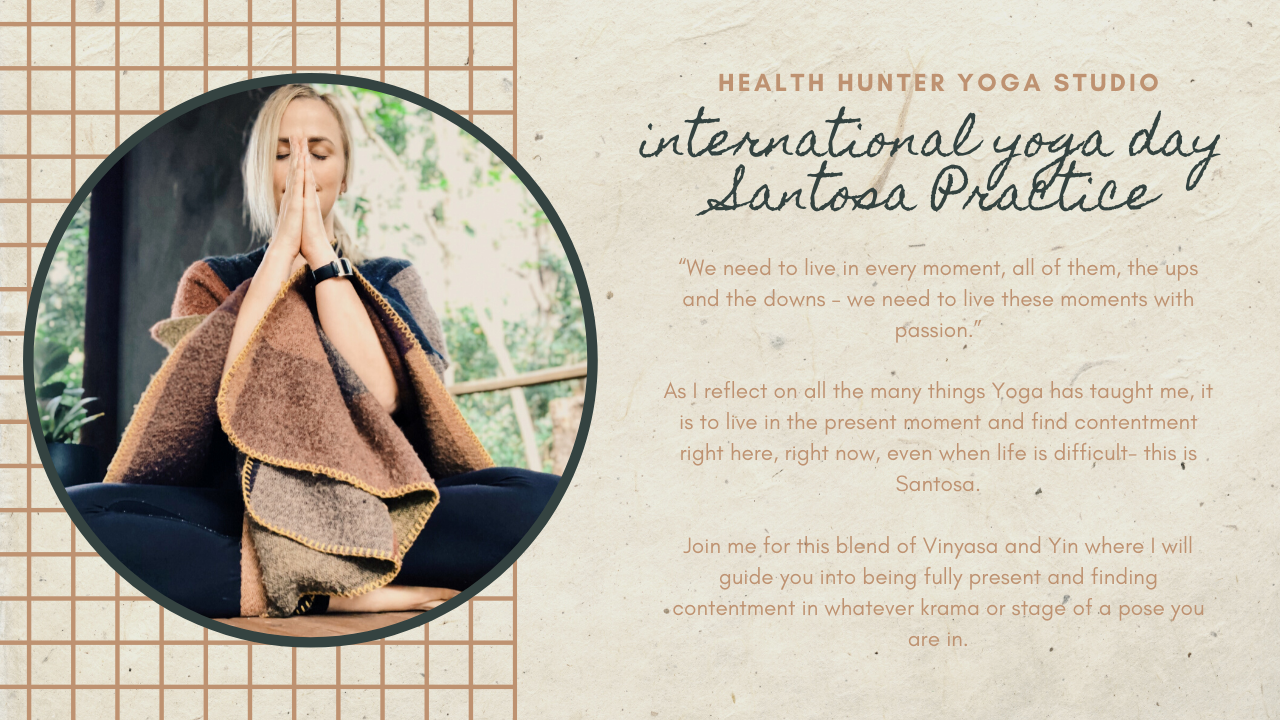
“We need to live in every moment, all of them, the ups and the downs – we need to live these moments with passion and with grace.”

As I reflect on all the many things Yoga has taught me, it is to live in the present moment and to find contentment right here, right now, even when life is difficult- this is Santosa.

When we awaken to santosa, gratitude flowers and we diffuse our “need” for things that really aren’t important. The freedom of simplicity unfolds. Even if we’re dedicated practising yogis, doing “all the things” there’s still probably that internal chatter that at times says ‘I’d be happier if….or when ‘. Whether its losing weight, getting a different job, meeting someone new, or being able to get ourselves into that tricky asana we’ve been trying to master, there’s probably at least a thing or two you feel could make you happier or more content. Now, having the urge to want to grow and push ourselves just a little towards a goal isn’t a bad thing, in fact the responsibility for fulfilling our dharma still remains present. It just becomes bad if we obsess over the outcome rather than focusing on the intention of our actions. Santosha or ‘contentment’ doesn’t mean idly sitting back and relinquishing the need to do anything. It simply means holding santosa (accepting what we have and what we are already) at each point of the journey, and moving forwards from there. 

So on this International Day of Yoga, I would love for you to set aside an entire day just for you. offer you this Santosa themed VinYin practice that will guide you into being fully present and finding contentment in whatever krama or stage of a pose you are in.

I’ve put together a mini retreat day workbook; complete with a meal plan, recipes, shopping list, Ayurvedic self care practices and a worksheet to coincide with the class. So come join me, download the materials below, unroll your mat, and let’s get started!

Donwload Your FREE Mini Retreat Materials HERE


Rhian Hunter
Feeling blocked?

For the most part, I would say I’ve always been a  natural, and confident communicator. Being in tune with my body physically and energetically, I’m guided to areas that require work. 

The throat chakra is our self expression vehicle; it’s where emotions and intentions converge to create words, words that then create meaning and connection with others. So when we feel blocked in this energy Centre our ability to express ourselves and communicate becomes halted. 

Since the beginning of our self isolation I’ve been making a conscious effort to keep our lives as close to ‘normal’ as they can be, and for the most part I’ve been successful. Spending most of the time entertaining/tending to my family, doing my own practice on the mat, and then using any free time/energy creating and producing content to stay connected to my lovely community.

Sadly, these last few weeks, that “time” for ourselves and for creation has become fleeting. Both girls not sleeping during the day, and a 2 year old near impossible to get to sleep before 9pm. It’s not surprising that I’ve been feeling a little spread thin, as I externalise all my energy with the intention of serving others. This is not a cry for help or sympathy, I’m always ok with how things unfold, but rather an explanation as to why I’ve been a bit quiet on this front, and why I will be, as I need to start internalising some of this energy for myself. 

In fact, it’s taken me at least 2 weeks to write this,  finding the words, finding the right words, wondering how those words would be perceived, holding back and then starting again. This choking if you will, or holding back and not speaking from a place of truth indicates to me that energy flow to Vishuddha is hindered and requires my attention. 

Physically I’ve been experiencing headaches, neck and shoulder pain, and although my thyroid disease is managed some of the symptoms of that have been surfacing. So this post is not to say that I’m taking time away, more so, that I’m taking time within so that I can realign myself with my creative identity, and in doing so continue to work with you all from a place of authenticity on the mat in the near future...

If anyone else is feeling a little like this, then I encourage you to take my 45minute Hatha Yoga for Self Expression + Communication Flow below 🙏

Love + Light Namaste

Rhian Hunter
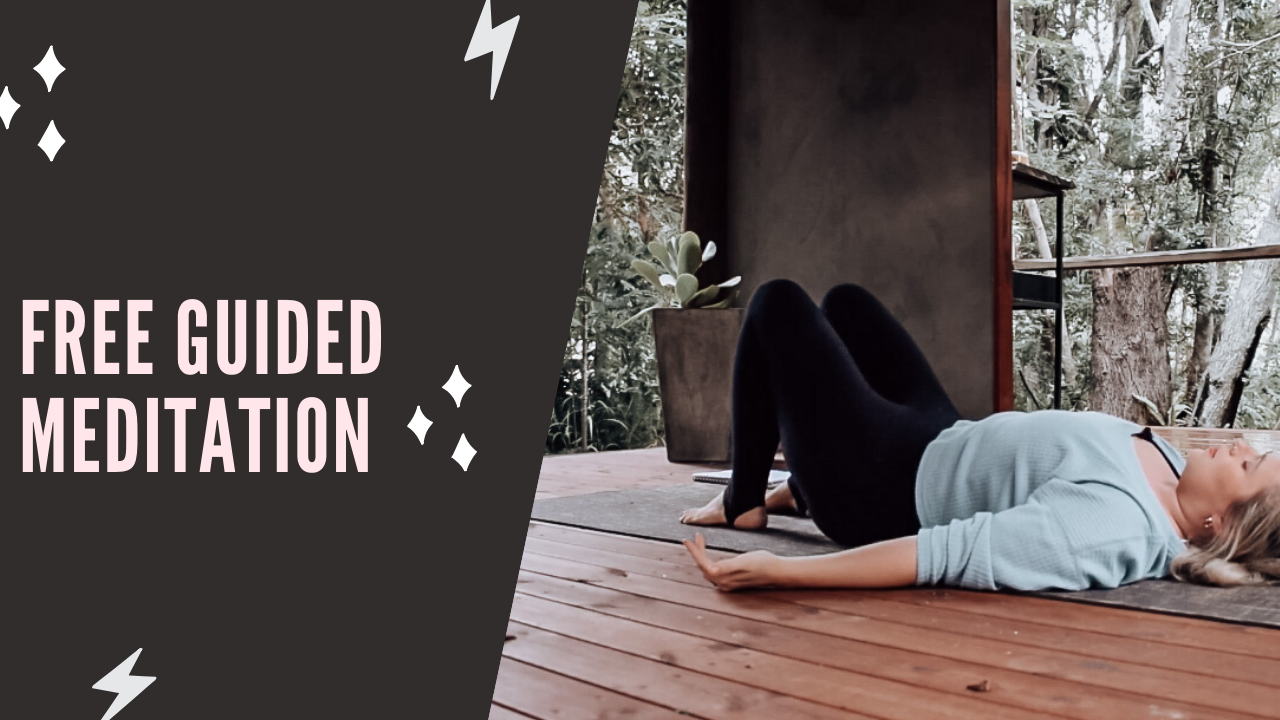
FREE Guided Awareness Meditation

Find some space, roll out your mat or cushion, gather any other relaxation props ( eye pillow, blanket, blocks etc ). Hit play, and settle in for this awareness guided meditation.

Guided Meditation

Rhian Hunter
Meet the fourth layer of your being: The Vijnanamayakosha (The Wisdom Body)

Guys, we are almost at the very centre of our being. But for now, Say hello 👋🏽 to your 4th sheath - The Vijnanamayakosha (the wisdom body).

This is where your ability to discern what you need, how to use your intellect, your determination/will and your sensory organs reside. Even though this kosha is associated with wisdom and consciousness, it is not the same as our true self. This is largely because it is transient, changing, limited and not always present.

It is responsible for all inner growth and personal development; this includes the presence and evolution of morals and ethics. This kosha seeks to draw awareness from what is happening in front of the senses to a much deeper mental state, therefore it should come as no surprise that the central goal here is higher wisdom.

Intuition and Willpower are connected to both our third eye and solar plexus, and like the other koshas it is interactive and dependant upon the other layers of the body. Practicing Asana (poses), Dharana (concentration), and Dhyana (meditation) can help you connect to that deeper intuition, wisdom, and knowledge.

On Saturday we worked through a series of Balancing Postures, Twists, Core Work and Single-Pointed Concentration to help activate and align this sheath, and finished our practice with Chitta Mudra ( the gesture of consciousness ). I’ll include some detailed instruction about how to practice this mudra meditation below as well as some other practices that can help awaken this sheath.

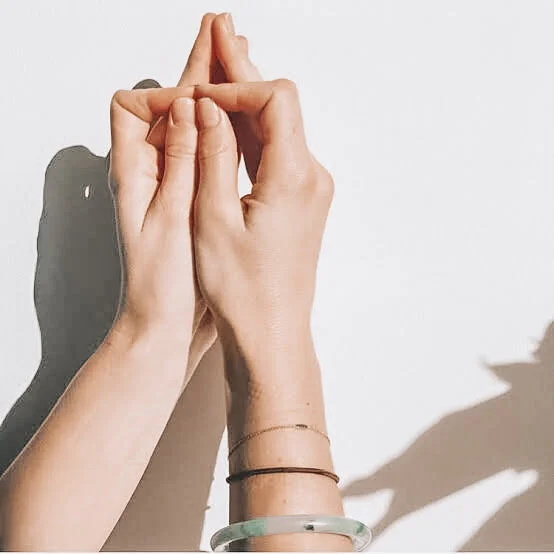
CITTA MUDRA: Citta mudra is a simple yoga technique or gesture, designed to promote the awakening of consciousness. As a Samyukta Hasta ("double hand") Mudra, it is

Performed by placing the hands in prayer position, known as Anjali Mudra. The forefingers are folded until the tips touch the tops of the thumbs, while the other fingers remain extended.

Citta Mudra may be practiced while seated, prone, standing or in movement, as long as the body remains relaxed and symmetrical. It may also be practiced during Pranayama and meditation.

Trataka, or concentrated gazing, is one of the shatkarmas (cleansing processes) of yoga, and forms a bridge between the physically-centered and mentally-centered yoga practices.

To practice trataka, sit in a comfortable meditation posture in front of a low table. Place a candle on the table so it’s at eye level and an arm’s length away. Close your eyes and relax your body for a few moments. Open your eyes and gaze steadily at the candle’s flame, without blinking or moving your eyes. Keep your awareness on the flame. Do this for a minute or two; then close your eyes and continue to focus on the internal image of the flame. When you can no longer see the flame, open your eyes and repeat. You can practice this a couple more times; then rub your hands together and gently cup your palms over your eyes.

IMG_7246.jpeg
Rhian Hunter
Meet the third layer of your being: the Manomaya Kosha (The Mental Body)

Say Hello to the Manomaya kosha, the third sheath/layer of our being: The Mental Body.

Within this kosha is where we imagine, and dream. This kosha is comprised of our thoughts, our feelings and emotions. It is the part of you that creates meaning out of the world you inhabit and is one of the most challenging layers to transcend, because it’s where we feel and experience everything.

Just as our annamaya kosha (physical body) has layers: of skin, fat, tissue, muscle, blood and bones, so to does our mental body; the most superficial layer comprises passing thoughts, perceptions, images and emotions.

Our thoughts and perceptions have the ability to construct or destroy, therefore many of us swing like a pendulum from happiness to suffering, attaching or identifying with every thought, feeling and emotion. Naturally, the central goal here is FREEDOM. Freedom from the fixation we have on our thoughts and feelings. 

There are many aparigraha (non attachment) exercises or practices that can offer us this freedom. You will find that much of these practices are incorporated into your yoga classes.

MANTRA:

At the start of a class we will usually have you set yourself an intention/affirmation or a mantra that you can use to bring your awareness back to, as your mind begins to wander. In Sanskrit ‘Mantra’ translates as ‘Man’ meaning mind and ‘Tra’, meaning tool. Mantra or affirmations are one of the most effective tools we can use to transcend and purify the mind. This is a basic use of mantra, if you wish to deepen  Your mantra practice I suggest the following:

Find a quiet space where you will not be disturbed. Light incense or candles, to cleanse the space. Find a comfortable seated position, sitting either on a cushion or bolster to raise the hips higher than the knees. Mantra's can either be vocalised or recited silently. Mala beads may also be helpful to count the mantra repetitions. When you first begin the practice you may start off with fewer repetitions, building up to 108 repetitions. Mantra is best practised in the twilight hours - a reflective time to pause, find stillness and take the time to transition into and out of your day. Don’t have a mantra ? You can listen to one of my favourites here: guru mantra:

guru brahma, guru vishnu, guru devo maheshwarah

guru sakshat, param brahma, tasmai shri guravay namah

This ancient Sanskrit chant to the guru, the remover of darkness, illuminates and reminds us that we hold the keys to our own happiness internally. 

SELF INQUIRY:

This little exercise can be practiced  anywhere at anytime, in fact I encourage you to do this in a place where you’re likely to be disturbed in someway. The goal is to watch your thoughts, see if you identify with them in an unhealthy way, or whether you can witness these thoughts without attachment. For example; if someone pushes in front of you, or cuts you off on the road - what are your immediate thoughts and feelings? Do you even have a reaction?

This next self inquiry exercise is adapted from an exercise developed by the spiritual teacher Byron Katie. Think about a situation in your life that is charged in some way. Write down each of your thoughts about it. One by one, consider each thought and ask yourself, "How would I be or feel without this thought?" Begin to observe how you are breathing, witness your energy, and your mental experience shift. Now, consciously replace the thought with one that feels empowering and real—such as "I am free to choose my perspective" or "There are other ways this can be viewed." Now notice whether this new thought brings greater spaciousness to your mind.

I really encourage you to do this regularly. When you change your beliefs, or become mindful of your habitual reactions to unpleasant emotions, you actually alter the neurochemistry and the structure of your brain.

PRATYAHARA:

A Sanskrit term meaning ‘withdrawal of the senses’. We live in a world of sensory overload. Pratyahara offers us a haven of silence and freedom. It’s very possible that you have practiced this in each class during Savasana (relaxation). During the second stage of savasana, you are withdrawing from the external world without losing contact with it. Here you still register input from your sense organs but you don’t respond to that input. You can follow my guided pratyahara meditation here

MUDRA

Another fantastic way to prepare for pratyahara is by using Shanmukhi mudra, which is the practice of closing the “six gates” or sense organs of the head. The gates refer to the areas where prana comes in and goes out. There are a few variations, but I was taught like this: with your open palms towards your face and elbows level with your shoulders, place the thumbs over your ears. Next, gently close the eyes with your index fingers, middle fingers connect to either side of the nostrils, and the ring and little fingers are above and below the lips. Allow the nostrils to slightly open for gentle inhales/exhales, closing the flow for a few seconds between breaths. While in the silence, draw the awareness inward. Listen for sounds, feelings, and visions in the body. I find it most beneficial to practice Shanmukhi mudra after asana and pranayama and as a preparation for meditation.

Rhian Hunter
Meet the second layer of your being: the Pranamaya kosha ( The Energetic Body)

. You can think of this sheath as the organising field that holds our physical body together. This life force or Prana as we call it in yoga is the energy that governs your biological processes, from breathing to digestion, to the circulation of blood. It cannot be seen and measured, but only felt.

Prana can become blocked and distorted by external factors such as poor diet, negative thoughts, and an unhealthy and sedentary lifestyle. When prana is blocked or weak, it can lead us to experience a range of physical and emotional symptoms. So the central goal here is to clear blockages or free up energy so that it can travel through the body more efficiently; when our prana can flow freely we feel healthy on a physical level, as well as on a mental and spiritual level too.

So how can we nourish and sustain this layer of our being?
Yoga of course! Yoga devotes an entire class of practices that help to restore balance and flow of prana. Pranayama (Breath work) is the best place to start. Without perplexing you by discussing the various pranayama techniques here, try simply taking a few, slow deep breaths and observe how this can instantly make you feel better. Our Asana ( Yoga poses ) are designed to move stagnant energy and improve the flow of prana throughout the body. Mantras and intentions that we set at the beginning of a class help to lift our vibrational energy and meditation helps to calm our minds.

Yoga aside, there are many other ways that can benefit your prana, such as eating healthy foods ( which have their own vital energy ), being in nature and energy healing ( such as reiki, crystal and chakra balancing ). If you haven’t had one of these then I highly recommend @tracies_healing_ and @itsallgood_naturaltherapies.

In this Saturday’s Hatha/Vinyasa Class we will explore our bodies potential by pushing through emotional and physical blockages - I’ll include a mudra, pranayama and guided meditation on the blog on Sunday for those who missed out/ or want to practice at home 

Rhian Hunter