
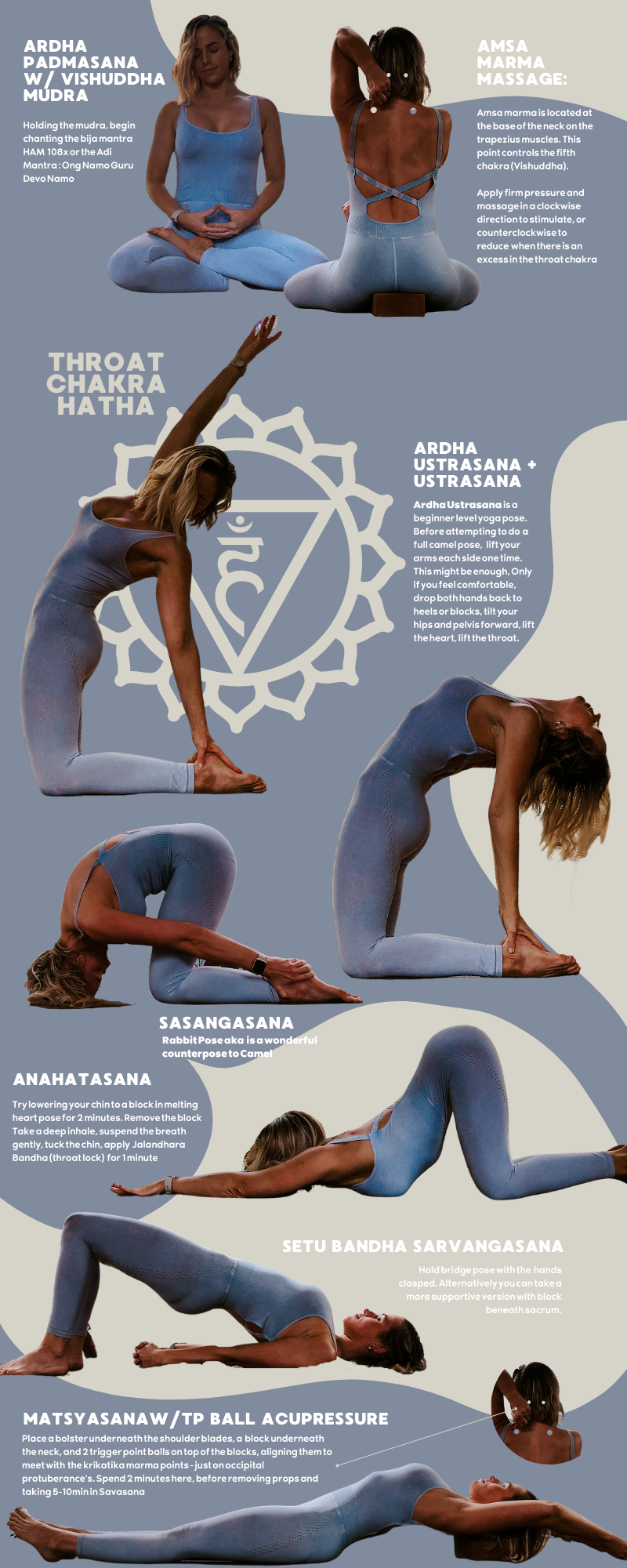

Pair this with a Metta Meditation to complete your Heart Expanding Practice
In this flow, we inspire chi flow through the lung meridian. Located in the chest and protected by the rib cage. The lungs are responsible for filtering air and oxygenating blood. The lungs draw in chi from the air and send it down to the kidneys. The lungs are considered to be the most fragile organ because of their close connection to the outside.
The meridian line starts at the inside top of the arm – right between where your collarbone and shoulder bone are – and goes down the inner arm to the wrist crease closest to the thumb, down the inner edge of the thumb and out to the outer edge of the thumb. Trace this line on yourself to feel where the energy of the lung meridian travels.
When the lungs are out of balance we can experience colds, coughs, occipital headaches, asthma and skin issues. It is often connected with grief, sadness, depression and disappointment. When in balance, we can experience fairness, acceptance, self-protection and dignity.
The lungs are associated with the metal element, the colour white, and Autumn.
Hold poses anywhere from 3-5 minutes or whatever feels comfortable to you.
Do not practice Bhastrika Pranayama if you have high blood pressure, glaucoma and/or are pregnant.

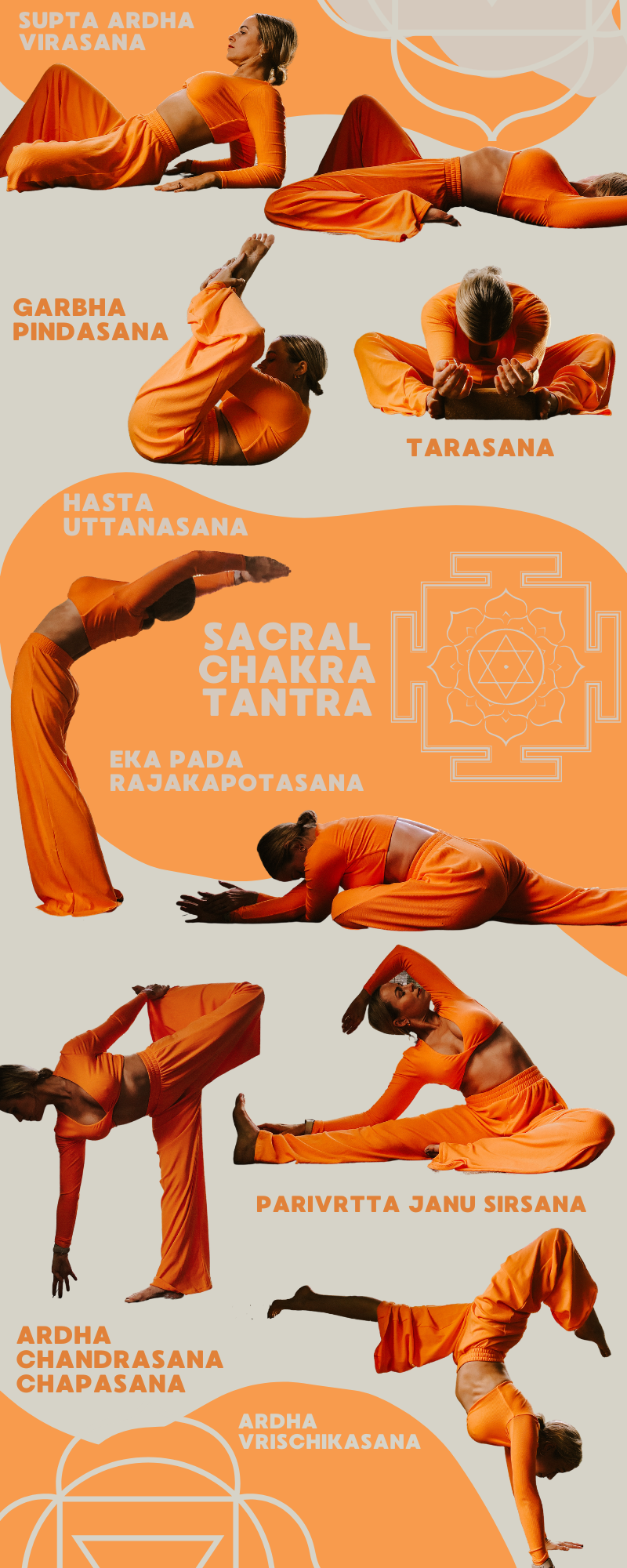
Tantra yoga teaches that the body is a place of worship and the senses can bring ecstasy and enlightenment - hence its connection with the pleasure principle of the sacral chakra.
The second chakra is a point of duality - where opposites coexist and movement begins. Tantra reflects this duality, originating from the worship of the she-and-he hindu deities Shakti (dynamic, creative, feminine) and Shiva (static, destructive, masculine).
Tantra is often associated with tantric sex, which is a sensual, spiritual form of sex. But these sexual practices are actually just one part of tantra and are actually more accurately described as neotantra. Tantra means "to weave" in Sanskrit, and classical tantra is all about reaching spiritual enlightenment through connecting with your energy. This traditional understanding of tantra is the heart of tantric yoga.
Traditional tantra yoga focuses on internal connection and reflection, with physical flexibility, strength, and prior knowledge of the postures taking a backseat to the primary intention of self-knowledge and empowerment.
In this practice, there is no explanation on how to execute the asanas. Simply glance over the names (even if many are unfamiliar to you), and look a the shapes. At first this can be confusing and make you a little irritated, but push pass this and find freedom in being able to close your eyes and focus fully on your practice without the distraction of a teacher’s cues. Discover what feels good to you in each moment of your practice and trust that. Instead of doing the yoga, just be yoga.
To open up this chakra, and release any negative energy stored, I’ve offered some deep hip openers, and poses that strengthen the muscles around the pelvis, hips and buttocks. Throw in a Chandra Namaskar (moon salutation) and make sure you allocate time to play!
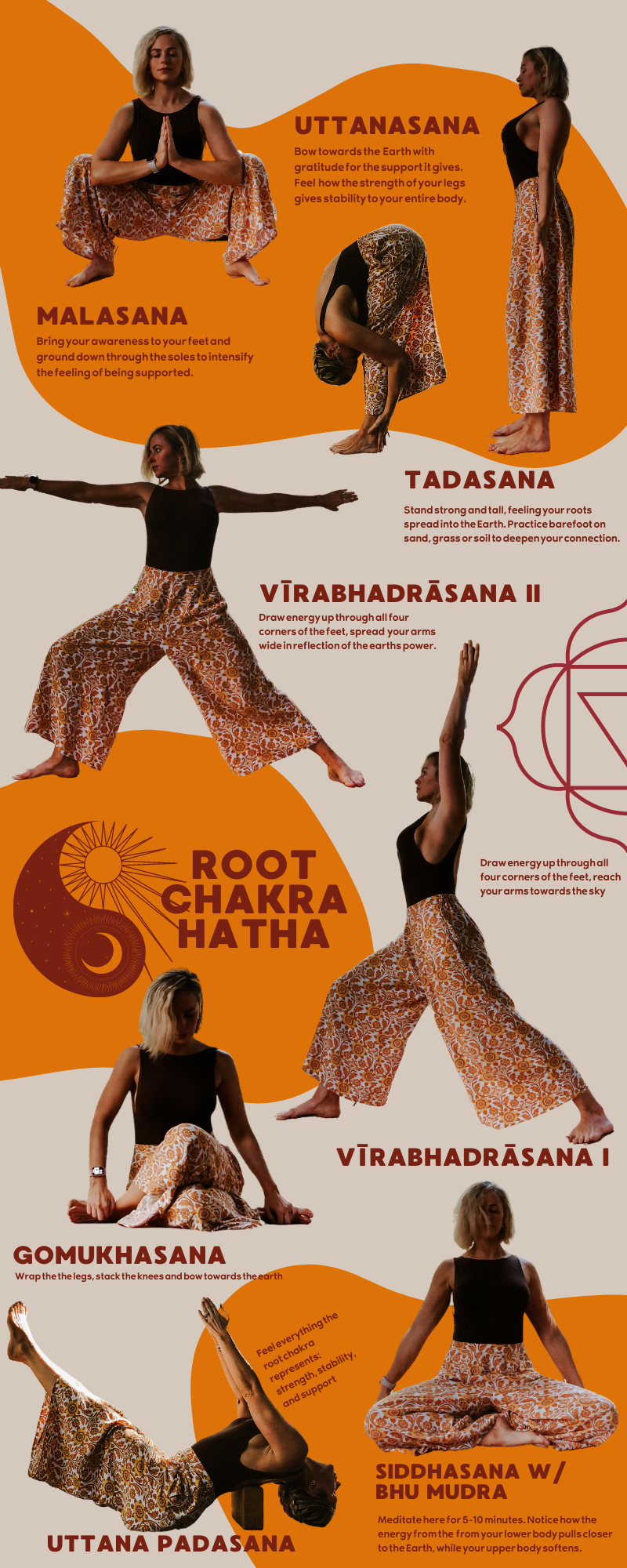
Poses that strengthen the legs, feet, and pelvic floor nourish the root chakra by building grounding energy. When performing these asanas, stand firmly on the Earth, root down through all four corners of your feet, pulling Earths energy upwards to nourish the entire body.
As y’all know, it always saddens me to miss out on, or worse, have to cancel a yoga class, but unfortunately the rain just wasn’t going to hold off. So here is a Yin flow for you to follow at home, a playlist, and a guided tune in for you to get grounded in your roots. Hope you enjoy
Root Chakra Playlist

As Kriyā yoga is the yoga of action, your task for our final week is to interface with the three tenets via your experiences in studio, and off the mat. These journal sheets can be used as a daily action log that includes the 3 distinct components mirroring the three tenets:
The Daily Action becomes your tapas or discipline
The Intention for the chose action puts īsvarapranidhāna into practice by exercising quality of action
Your reflection of the action enacts svādhyāya
I have pre-filled one of the journal sheets to give you an example of living your yoga on the mat and off it.
So relating to your yoga practice you might choose:
Take 12 conscious breaths
Do a guided meditation
Learn a challenging yoga pose
Create a small flow
Learn some yogic philosophy
Relating to your daily action off the mat you might choose:
Call a close friend
Read a chapter of a book
Get organised with meals + shopping lists
Dedicate a small amount of time to doing something for myself
Of course these are only examples, you can choose whatever you like, and every day presents the opportunity for a new action. So save, screenshot and print off 5-7 sheets, and get ready put your yoga into action with me next week!

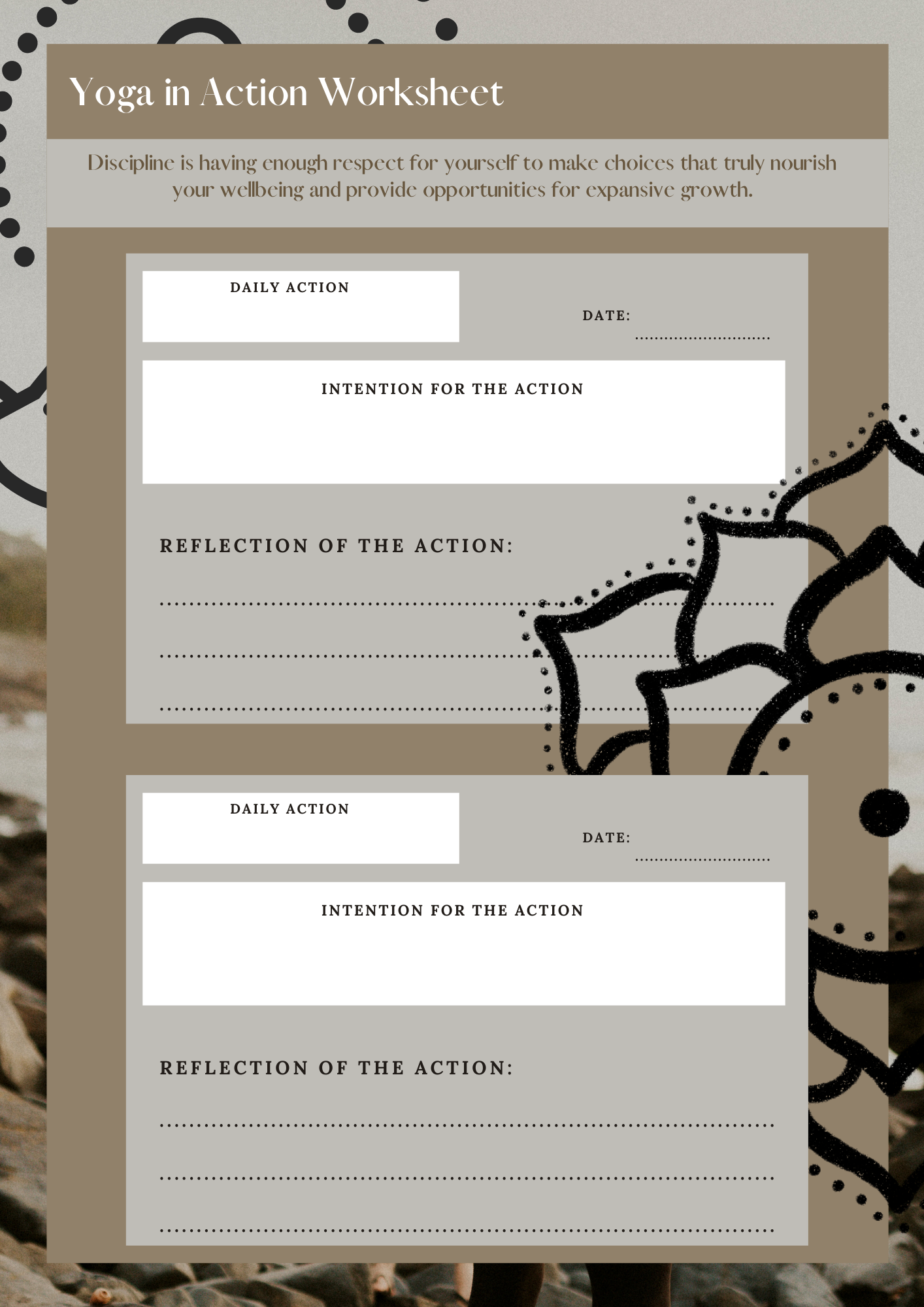
These days, self exploration typically is done in tiny, fragmented ways. For your body, you might take a yoga class or workout at the gym. For your mind, you take a short course, or read a good book. For your personal development you might undertake some healing therapy or see a counsellor. Study of the self needs an integral approach and doesn’t come from simply reading one self help book, or listening to a podcast, or taking a yoga class. Self-study comes from personal experience- knowing what your mind is doing, feeling what your body is feeling - every single day. Self study is when you examine what is inside you. It’s when you take the time to return to yourself, and reveal yourself, to yourself. In yoga, there are at least four developmental stages to this process. The below worksheet is a framework for svādhyāya, and for carrying you throughout your day.
Take the time to print 2 copies, and use one to practice svādhyāya on the mat, and the other for off the mat.

For those of you who have been attending my classes over the last 6 months, you’ll know very well how much I like to shake things up. The transitions ( the flow between and connection of movement to postures) have become just as important as the asanas chosen for that class. Whilst the poses can challenge us physically, the transitions bring a mentally challenging component to each session, so it’s not just your body getting a work out, your brain does too.
It’s within these wacky transitions or your not so traditional flows, that each of us are developing better proprioception.
PROPRIO WHAT?
Proprioception is basically how your brain “thinks” your body looks like and how it moves in space. This representation of your body is like an internal GPS that is created using a lot of data, including info the brain gets from our sensory receptors when we move. The brain uses it every time you move so that you do so as accurately as possible without necessarily having to look at your body. So basically, the more we move in different directions and positions, the better our proprioception becomes. For example, if you are right-handed, the map your brain has of your right hand is really detailed because you use it all the time in different situations. However, the map of your left hand, might be a little less fine-tuned which is why you may not have as much dexterity with it.
One of our students who attends several classes a week and I got chatting one morning after class. This student is usually at the front of the class for better acoustics, but on this particular day that normal spot had been taken. So naturally I checked in after to see how she could hear me. She said to me that “some parts were harder to hear, but it actually didn’t matter, because without even looking up or hearing your direction, it’s as if my body already new exactly where to go “ this made me so damn happy! because this is exactly the internal movement maps I want you to create. Now I should state for the record too, that this wasn’t transition was just your standard - upward dog to downward dog, or warrior 3 to eagle - it was 3 tricky and unusual poses that you wouldn’t often see strung together. But she did this effortlessly, guided by her own intuition/ mapping that’s occurred from all the work she does on the Mat several days a week, every week.
Vinyasa yoga really offers us this perfect opportunity to disrupt routines: how we use the mat, how me move from pose to pose, changing the pace, etc. Repetition, while good for performance, diminishes our sensing capacity because the brain knows what’s coming next. Novelty and variety keep our inner listening skills sharp.
While it’s fun to flow effortlessly through a few rounds of sun salutations or a familiar seated sequence, it does so much more for your brain and body to navigate new ways to get into familiar poses, or even combining poses together ( ex. Thread the kneedle X 3 legged dog ) so you can work the body in many angles.
Have a little fun at home by travelling on and beyond your Mat with the following: ( you can also slow the video down below and watch, if you’re a more visual learner ).
Ashwa Sanchalanasana (RUNNERS LUNGE) to—> Ardha Matseyndrasana 2 ( HALF SEATED TWIST 2) to —> eka pada Adho Mukha Svanasana ( 3 Legged Dog ) to —> Ardha Matsyendrasana 2 ( HALF SEATED TWIST 2) to - Ashwa Sanchalanasana ( RUNNERS LUNGE )
to—> Vasisthasana ( SIDE PLANK )
to —>Camatkarasana ( WILD THING )
As long as you aren’t applying hefty loads, you have a solid understanding of the poses and good knowledge of anatomy, it’s OK to break yoga alignment “rules” so that the body learns to adapt to a variety of situations.
Don’t stress if vinyasa yoga isn’t your Jam, practicing Yin yoga also has the ability to help increase proprioception and here is why.
Yin offers a different approach to our yoga practice, here we looking to affect the joints and the fascia rather than the muscles. For me, one of the most intriguing features of fascia is that it‘s the largest and most wired sensory organ in the body. The extracellular matrix contains more nerve endings than our tongue and our eyes! So if the primary feature of a yoga practice is that it supports the mind-body connection, then fascia is the physical gateway for that connection.
As the principle facilitator of our sense of touch, fascia is the organ that cultivates proprioception and interoception, or presence manifest in the body. Sarah Powers, refers to it as “body-based consciousness.” When we practice movement with intention and attention, we promote fascia health by increasing its sensing capabilities. Increased proprioception and interoception helps us to feel more present and connected.
So why should improving proprioception be a high priority for you?
Well firstly, you become better at moving.�The better your map, the better your brain can decide and predict how you will move. Typically, professional dancers, martial artists, gymnasts and other high performance athletes have great body maps. On the other side of the spectrum, someone with compromised proprioception (neurological accident, use of alcohol, etc) might not move with as much ease or accuracy. You may not be aspiring to be an athlete but you don’t want to have poor posture and feel like our body is older than it is, so training proprioception is key. And if you’ve a got poor proprioception, you might be a little clumsy, and not as quick to react and as a result be more prone to injury, and injuries suck balls!
And if you’re reading this and thinking I want to do something to improve mine, but yoga isn’t your thing, then there are many other ways you can. I challenge you to give some of these a crack for the next week, check in with yourself and see how you feel.
1. Move as much as possible in novel ways all throughout your day.
2. You are how you move. Try to balance your proprioception so that your map becomes as accurate a representation of your body as possible. For example, if you are right handed, try to do things with your left hand and leg more often. If you like doing a sport that tends to have a repetitive motion, the active body parts will have better proprioception but not the rest of your body. When you move, make sure you are not just doing the same movements over and over again. Introduce spontaneity into your workouts. Change up the angles, the positions, the transitions, the load or even the environment you practice. And if you love a sport that is very “repetitive” like running or spinning, try incorporating other workouts as well to further develop your body awareness. Yoga aside other fitness methods that are amazing for full body proprioception include: dance, martial arts, the Feldenkrais method, NeuroPilates, TAM, and Parkour. Also using props like a balance board, trigger point balls and yin balls can further stimulate your receptors and lead to better proprioception.
3. Focus. The saying “where your mind goes, energy flows” comes to mind. Pay attention to your movement – whether you are trying to correct your golf swing or doing a yoga pose, focus on things like where you are putting your weight, the positioning, the rhythm, how balanced you feel, etc. The more you bring attention to these details, the more your brain gets data on your body’s movement.
4. Use a mirror. Mirrors are a wonderful way to see how you are moving. If you struggle with a pose or learning a dance, Try it in front of a mirror, and look to see what you are doing – in most cases, you can correct your form almost immediately. If you don’t have mirrors you can always video yourself too. This is also a great technique because it makes you realise what your gait and posture are like and what you need to correct. Again, this is sending your brain a lot of information that will improve your proprioception.
5. Do what it takes to heal your injuries: and I mean real injuries (not just old age, or sore knees). In my experience, past injuries are a common reason for people to shy away from exercising so please, if you get injured, invest the time and effort needed to heal. Proprioception takes a hit when you get injured because your “danger” signals are louder than your proprioceptive ones. This in turn makes you use your injured body parts less, which reduces the nervous signaling for that area, which further decreases your proprioception…then comes chronic pain…and there is soo much more you can learn about the link between chronic pain and poor proprioception, but you get the jist of it. If you have an injury, let it properly heal and rehabilitate yourself slowly but surely.
6. Disrupt your routines; drive a different route to work, try a different coffee shop, use your left hand on Monday, Wednesday, and Friday, try a different diet, shower at a different time of day etc - there’s so many ways you can shake things up, and who knows you might find you enjoy the new ways betters. If you do happen to notice a shift, an expansion in your brain - let me know!