Manomaya - The third layer & the inner landscape through which perception dances.

We’ve knocked on the body.
We’ve felt the clay of Annamaya: the muscle, the mineral, the hunger, the heat.
Then we moved through Pranamaya, the current running through it all.
Now we travel a little further inward.
Manomaya.
The Mental Body.
In the yogic model, this sheath is composed of manas (the mind) working alongside the indriyas, the sense organs. Through sight, sound, smell, taste and touch, impressions constantly stream inward, where experience is shaped into thought.
A swirling layer where thoughts drift, where your inner story slowly forms, where memory, imagination, and worry eddy together like smoke in a room.
Most of us grow up assuming this maelstrom is who we are. The commentary, the looping and the endless narration. But yoga has always drawn a distinction.
This layer, the Manomaya Kosha, is not the deepest truth of you, and difficulty will arise if you begin to believe that it is.
The Bhagavad Gita whispers this when it describes the mind as arising from sattva guna: clarity, intelligence, luminosity. Beautiful qualities, yes. But still part of nature. Still something that appears, shifts, and eventually dissolves.
Which means the mind, for all its brilliance, is not the ground of who you are. It moves, and yet you remain.
You, the one who watches,
the centre holding the current without being swept away. That’s the witness. Once you start to look closely, you’ll notice that the mind behaves very much like the body. It is fed.
Fed by the books you devour, the conversations you linger in, the media you swallow and the words you speak to yourself, all of it seeps in and colours this layer.
And just as poor food can leave the body heavy, poor inputs can leave the mind crowded and restless.
Of course, the mind evolved this way for a reason. Its job is to scan for patterns, anticipate outcomes, protect you from danger, and learn from the past. Yes, a remarkable survival tool it is.
But in a world where the immediate danger is rarely a tiger in the grass, that same river of thought now spins endlessly. Replaying conversations, rehearsing future ones, interpreting, comparing, judging, narrating long after the moment has passed.
Inside this mental ocean, there’s “I” and “mine.” The ego, the small individual self, reaching out, collecting, judging, owning. Yet beneath all the waves, the Self remains, untouched, steady.
The mind fluctuates, forms waves, rises and falls, twists and turns. Desire, fear, joy, all riding on the current. And yet the awareness watching? That presence is not tangled in the current. It isn’t rushing downstream with every worry or memory. It simply observes the movement as it passes through.
Like standing on the riverbank rather than being pulled along by the water.
Meditation, breath, and radical awareness don’t stop the river. They just bring you back to the bank. Thoughts, emotions and interpretations, they’ll still appear, but they lose their authority.
You are no longer mistaking its movement for your identity.

Meditation opens a space to witness the flow. Breathwork guides the rhythm, settling turbulence into calm. Journaling lets stories spill onto the page, giving shape to what once swirled unseen. Mantra tunes the mind to a vibration that resonates through thought and body. Pratyahara draws the senses inward, softening the pull of the outer world. And marma massage touches the points where energy pools, coaxing stillness from movement and presence from distraction.
Through these practices, the mind begins to breathe in tandem with awareness, the currents of thought softening, the inner chatter shifting into patterns we can watch and understand. Each impulse, each flicker of emotion, becomes part of a living landscape, vibrant and flowing, rather than something to fight or control.
To feel this awareness directly, you can work with the marma points themselves, subtle gateways where energy flows and settles. I’ve recorded a short marma massage video you can practice before coming into meditation. In less than 3 minutes, you are guided through the key points that help calm the mental field, soften tension, and bring your attention fully into the present moment.
Let the practice be your entry into this inner river.
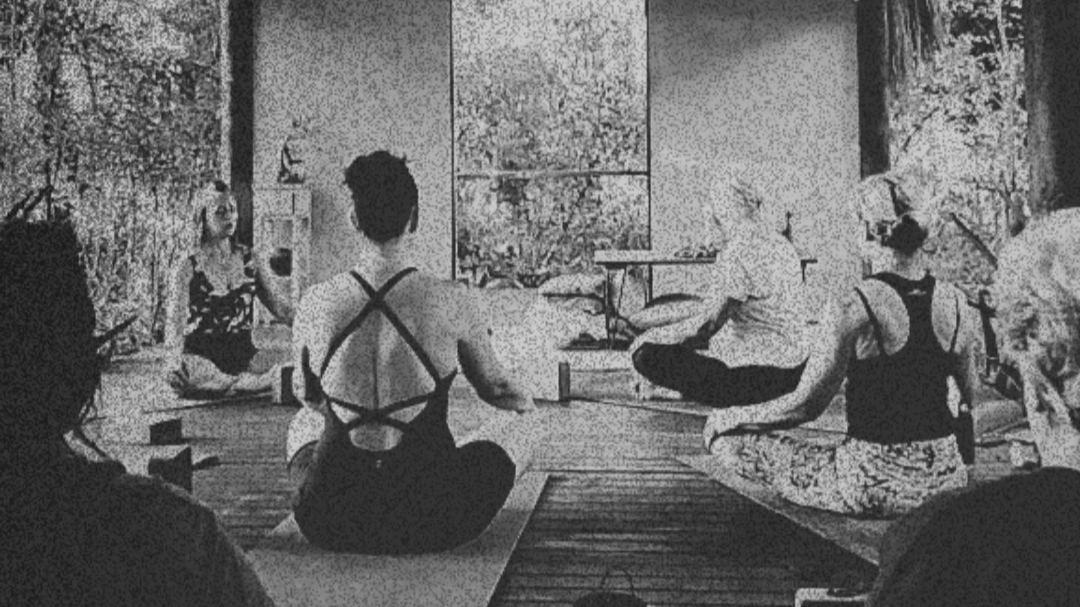
This week, in our Yoga Classes, our focus has been on recognising our innate orientation in movement, lingering in the pause, and then gently shifting into its opposite, a subtle seduction leading us beyond the pull of habit.
I encourage you to take this week to play with this, both on and off the mat. Feed your body something new, say yes to an experience that you wouldn’t, stand on your head for 10 minutes and